
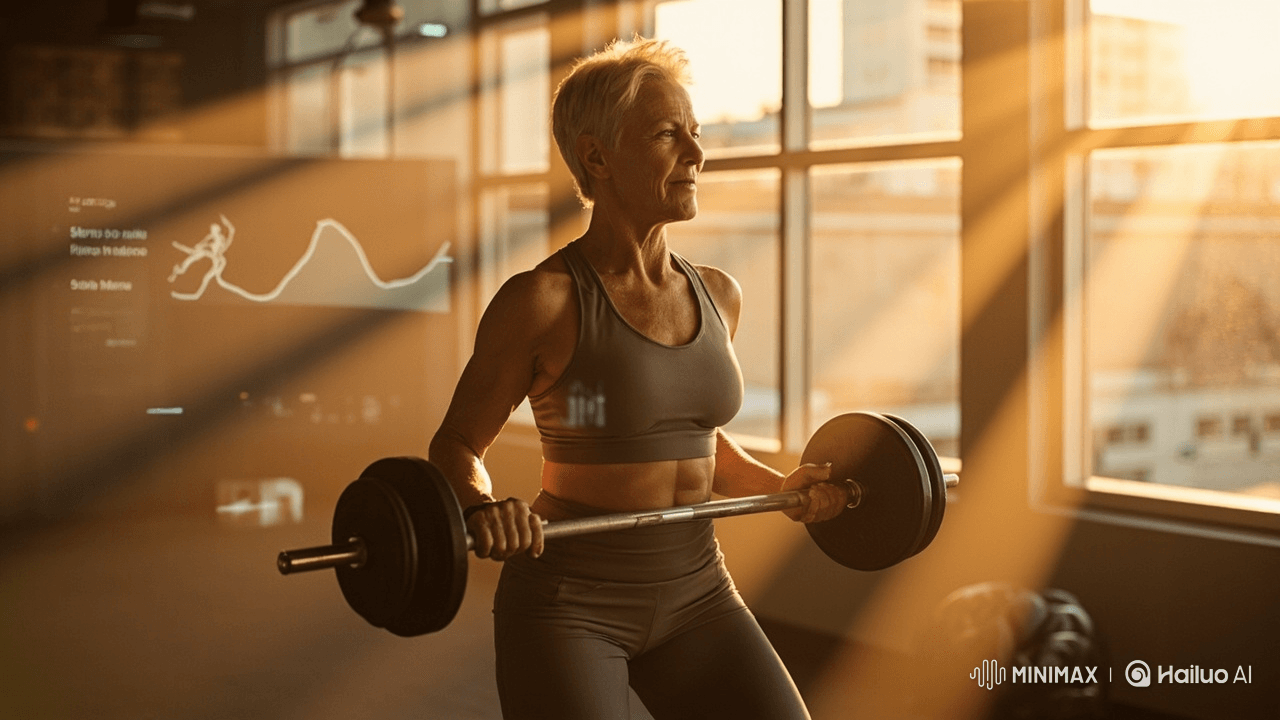
In 2025, adults over 65 represent the fastest-growing fitness demographic worldwide, with participation in structured exercise rising 41% since 2019 (Physical Activity Council 2025 Report). The data is unequivocal: regular fitness for seniors over 65 reduces all-cause mortality by 35–40%, cuts fall risk by up to 50%, and slows bone loss by 1–3% per year (CDC and NIH-AARP Diet and Health Study 2025 update).
Strength training for older adults, combined with targeted bone density exercise and balance exercises for seniors, is no longer optional. It is evidence-based medicine that preserves independence, prevents fractures, and maintains mobility in old age. This comprehensive guide synthesizes the latest 2025 guidelines from the American College of Sports Medicine (ACSM), National Institute on Aging (NIA), and British Journal of Sports Medicine.
The Physiology of Aging: What Actually Declines After 65—and How Exercise Reverses It
| Parameter | Typical Annual Decline After 65 | Reversal with Proper Training (2025 Studies) |
| Muscle Mass (Sarcopenia) | 1–2% per year | +8–15% gain in 12–24 weeks |
| Bone Mineral Density | 1–3% per year (women faster post-menopause) | 1–3% increase or halted loss |
| Balance & Reaction Time | 15–20% decade decline | 23–50% improvement in 12 weeks |
| VO2 Max | 5–10% per decade | 10–30% improvement with HIIT or zone 2 |
| Neuromuscular Power | 3–4% per year | 20–80% increase with power training |
Source: Journal of Gerontology 2025 Meta-Analyses
Strength Training for Older Adults: The Foundation of Healthy Aging
The ACSM 2025 guidelines recommend strength training 2–3 days per week for all adults over 65, using moderate (60–70% 1RM) to heavy (70–85% 1RM) loads.
Proven Benefits Backed by 2025 Trials
- 47% reduction in disability progression (LIFE Study long-term follow-up)
- 38% lower risk of depression (JAMA Psychiatry 2025)
- Reversal of 20–30 years of muscle aging in gene expression (McMaster University 2025)
Best Exercises and Progressions
| Exercise | Primary Benefit | Starting Weight | Progression (12 weeks) |
| Goblet Squat / Leg Press | Lower body power, fall prevention | Bodyweight–10 lb | 30–50 lb |
| Seated Row / Lat Pulldown | Posture, back strength | 20–40 lb | 60–100 lb |
| Deadlift (trap bar) | Posterior chain, bone loading | 20–40 lb | 80–150 lb |
| Overhead Press | Shoulder stability, bone density | 5–15 lb | 25–50 lb |
| Farmer’s Carry | Grip strength, core stability | 10 lb per hand | 30–50 lb per hand |
Bone Density Exercise: Loading Principles That Actually Work
High-impact and progressive resistance training are the only non-pharmacological interventions proven to increase bone mineral density after 65.
2025 Evidence-Based Protocols
- Impact: 40–100 vertical jumps or drop jumps 3–5×/week → +1.8–3.1% hip/spine BMD (Osteoporosis International 2025)
- Heavy resistance (70–85% 1RM) 2–3×/week → +1–2.6% BMD (Bone 2025 meta-analysis)
- Combination (impact + heavy lifting) → synergistic +3–4% in 12 months
Safe options for osteoporosis or osteopenia:
- Weighted vest walking (10–20% body weight)
- Whole-body vibration + resistance (emerging 2025 evidence)
Balance Exercises for Seniors: Preventing the #1 Cause of Injury
Falls cause 3 million ER visits and 38,000 deaths annually in the U.S. (CDC 2025). Balance training reduces fall risk by 24–50% (Cochrane 2025).
Tiered Progression System (NIA 2025)
Level 1 (Beginner):
- Feet together stand (30–60 sec)
- Tandem stance
- Single-leg stand with chair support
Level 2 (Intermediate):
- Single-leg stand eyes closed
- Heel-to-toe walking
- Tai Chi basic forms
Level 3 (Advanced):
- Single-leg Romanian deadlift
- Slackline or BOSU standing
- Dynamic perturbations (partner nudges)
Cardiovascular Training: The Missing Piece for Longevity
2025 guidelines emphasize Zone 2 (60–70% max HR) training for mitochondrial health and HIIT for VO2 max.
- Zone 2: 150–200 min/week → 19% lower mortality (JACC 2025)
- HIIT (4×4 Norwegian model adapted for seniors) → 25% VO2 max increase in 12 weeks
Safe formats: recumbent bike, swimming, brisk walking with intervals
Sample 12-Week Fitness Program for Seniors Over 65 (2025 Evidence-Based)
| Day | Focus | Duration | Key Exercises / Activities |
| Monday | Full-Body Strength | 45 min | Squat, row, deadlift, overhead press, core |
| Tuesday | Balance + Zone 2 Cardio | 40 min | Tai chi flow + 30 min brisk walk |
| Wednesday | Rest or gentle yoga | — | — |
| Thursday | Full-Body Strength + Power | 45 min | Same lifts + medicine ball slams, box step-ups |
| Friday | Balance + HIIT | 35 min | Advanced balance + 4×4 intervals on bike |
| Saturday | Impact + Long Zone 2 | 60 min | Weighted vest walk + 50 jumps |
| Sunday | Active recovery | 30 min | Light swim or gardening |
Technology and Tools That Actually Help in 2025
- Wearable feedback: Apple Watch Fall Detection + WHOOP recovery scoring
- Smart equipment: Tonal, Vitruvian Trainer (automatic weight adjustment)
- Apps: Stronger by Science Senior, SilverSneakers GO, Kaia Health (AI posture correction)
Nutrition and Recovery Strategies Specific to Seniors
- Protein: 1.6–2.2 g/kg/day (2025 ISSN position stand) → timed 25–40 g post-workout
- Vitamin D + K2: 2,000–4,000 IU + 100–200 mcg daily for bone health
- Creatine monohydrate: 5 g/day → safe and effective for muscle & cognition (J Int Soc Sports Nutr 2025)
Real Success Stories from 2025
- Joan, 78: Increased deadlift from 45 lb to 185 lb in 18 months → off blood pressure medication
- Robert, 82: Reversed osteoporosis (T-score -2.8 → -1.6) with impact + heavy lifting
- Maria, 71: From walker to hiking 5 miles after 12 months of structured balance + strength
Conclusion: Age Is Just a Number When You Train Like This
Fitness for seniors over 65—combining progressive strength training for older adults, targeted bone density exercise, and dedicated balance exercises—is the most powerful tool available to maintain mobility in old age and add healthy, independent years. Start today with bodyweight, progress safely, and consult professionals. The science is clear: those who strength train after 65 don’t just live longer—they live stronger.
Disclaimer: This article is for informational purposes only and is not a substitute for professional medical advice. Always consult your physician or a qualified healthcare provider before beginning any new exercise program, especially if you have osteoporosis, heart conditions, or balance issues.