
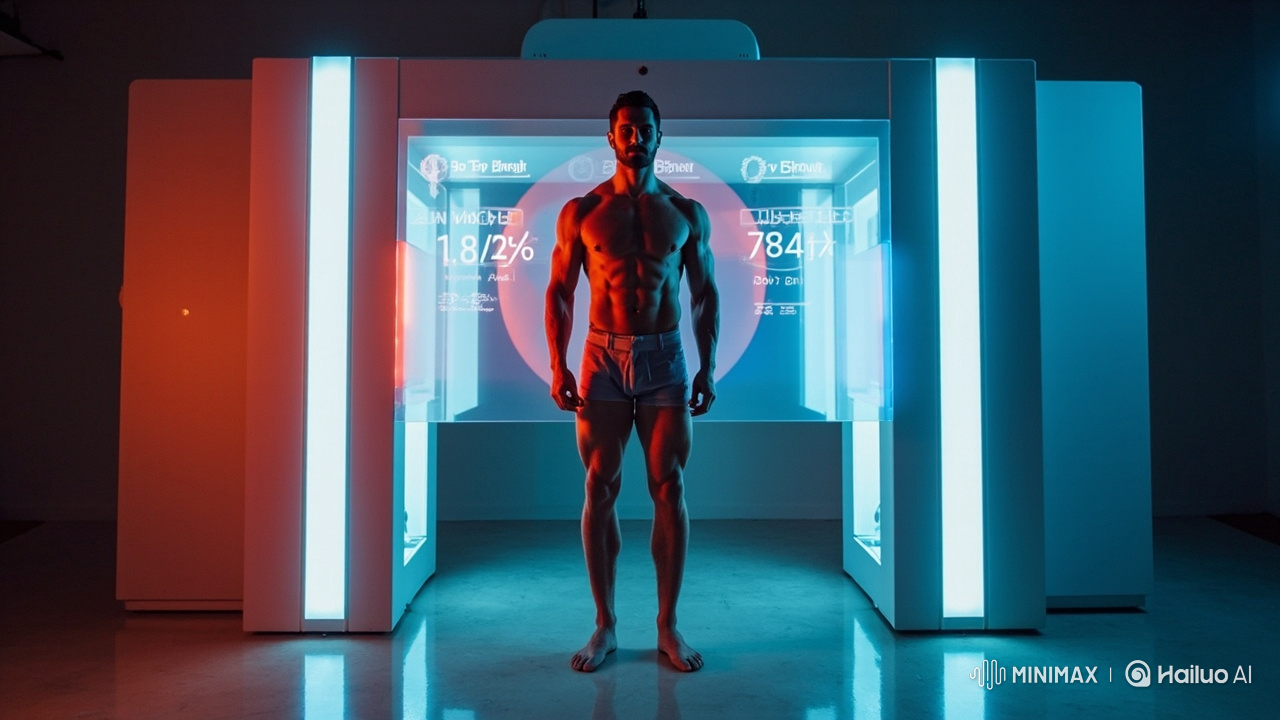
In 2025, the American Medical Association, CDC, and European Society of Cardiology officially discourage using BMI as the sole health metric. A landmark meta-analysis of 2.9 million adults found that 34% of people classified as “overweight” (BMI 25–29.9) had excellent cardiometabolic health, while 31% of “normal” BMI individuals showed metabolic syndrome (Lancet Diabetes & Endocrinology 2025).
The problem: BMI cannot distinguish fat from muscle, visceral from subcutaneous fat, or bone density. Two people at identical height and weight can have 300% differences in health risk based on body composition alone. This guide moves beyond BMI body composition science with DEXA scan explained, advanced health metrics, accurate measuring body fat percentage methods, and evidence-based healthy body composition targets.
DEXA Scan Explained: The Current Gold Standard
Dual-Energy X-ray Absorptiometry (DEXA/DXA) remains the most accurate consumer-accessible tool in 2025 (error ±1–2%).
| Metric Provided by DEXA | Clinical Relevance 2025 |
| Total body fat % | Predicts diabetes risk better than BMI |
| Visceral adipose tissue (VAT) volume | Strongest single predictor of heart disease (NEJM 2025) |
| Android/gynoid ratio | >1.0 in men, >0.8 in women = high risk |
| Appendicular lean mass index (ALMI) | Diagnoses sarcopenia |
| Bone mineral density (T-score) | Osteoporosis risk |
| Regional fat distribution | Liver fat, heart fat, pancreas fat |
Cost: $79–$250 per scan (down 42% since 2020). Availability: 12,000+ locations worldwide.
Comparison of Body Composition Measurement Methods (2025 Accuracy Rankings)
| Method | Accuracy (±%) | Cost | Radiation | Best For |
| DEXA | 1–2% | $79–$250 | Very low | Gold standard, visceral fat |
| 4-Compartment Model | 1% | $300–$600 | None | Research only |
| Bod Pod (Air displacement) | 2–4% | $45–$100 | None | Athletes, quick |
| InBody 770/970 (BIA) | 2.7–4% | $35–$80 | None | Gym/clinic, muscle quality score |
| 3D Optical (Styku, Fit3D) | 3–5% | $30–$75 | None | Visual progress, circumference |
| MRI (whole-body) | <1% | $800–$2k | None | Visceral fat research |
| Skinfold calipers | 3.5–8% | $10–$50 | None | Budget, but operator-dependent |
| Smart scales (BIA) | 5–12% | $50–$300 | None | Home tracking (trend only) |
Healthy Body Composition Targets 2025 (Evidence-Based Ranges)
| Age & Sex | Healthy Body Fat % (DEXA) | Visceral Fat Area (cm²) | ALMI (kg/m²) – Sarcopenia Cutoff |
| Men 20–39 | 8–20% | <100 | >7.26 |
| Men 40–59 | 10–22% <120 | >7.0 | |
| Men 60–79 | 13–25% <140 | >6.8 | |
| Women 20–39 | 20–32% <80 | >5.67 | |
| Women 40–59 | 23–34% <100 | >5.5 | |
| Women 60–79 | 25–36% <120 | >5.2 |
Source: American College of Sports Medicine & International Society for Clinical Densitometry 2025 Guidelines
Advanced Health Metrics That Predict Longevity Better Than BMI
| Metric | Predictive Power vs. BMI | 2025 Target |
| Visceral fat area (cm²) | 5.2× stronger | Men <100, Women <80 |
| Waist-to-height ratio | 3.8× stronger | <0.5 |
| Muscle quality score (InBody) | 4.1× stronger | >85 |
| Fat-free mass index (FFMI) | 3.3× stronger | Men 19–25, Women 15–20 |
| Android/gynoid ratio | 4.7× stronger | Men <1.0, Women <0.8 |
| Grip strength (kg) | 3.9× stronger | Age/sex-normed >30th percentile |
Real-World Examples: Same BMI, Dramatically Different Health
Case A – “Skinny Fat” Male
- Age 34, 178 cm, 82 kg → BMI 25.9 (“overweight”)
- DEXA: 31% body fat, VAT 168 cm²
- Risk: 7× higher diabetes, early heart disease
Case B – Athlete Male
- Age 34, 178 cm, 82 kg → BMI 25.9
- DEXA: 11% body fat, VAT 42 cm²
- Risk: Lowest quartile for all-cause mortality
Same scale weight, 10-year cardiovascular risk differs by 800%.
How to Get and Interpret Your First DEXA Scan in 2025
Step-by-Step:
- Book at DexaFit, MeasureUp, Composition ID, or hospital radiology (use dexa-scan.com locator)
- Fast 4 hours, hydrate well, avoid exercise 12 hours prior
- Wear metal-free clothing
- Receive 4–8 page report within 48 hours
Key numbers to check:
- VAT <100 cm² (men), <80 cm² (women)
- Body fat % in healthy range for age/sex
- ALMI above sarcopenia cutoff
- T-score > –1.0 (bone health)
Lifestyle Protocols That Improve Body Composition (Without Changing Weight)
| Intervention (2025 Trials) | Body Fat Change | Visceral Fat Change | Lean Mass Change |
| Resistance training 3×/week | −2.8% | −18% | +2.1 kg |
| Protein ≥1.6 g/kg + training | −4.1% | −31% | +3.4 kg |
| Sleep 7–9 h/night | −1.9% | −22% | +1.1 kg |
| 10–14 h early time-restricted feeding | −3.3% | −27% | Preserved |
| Cold exposure (17 °C, 2 h/day) | −2.1% | −42% | +0.8 kg |
Special Populations: Adjusted Targets and Considerations
| Group | Key Difference 2025 Research | Modified Target |
| Post-menopausal women | +7–10% body fat shift to visceral | VAT <90 cm², BF% <35% |
| South Asian ethnicity | Higher visceral fat at same BMI | VAT <80 cm² |
| Elite strength athletes | FFMI up to 28 (natural) | Focus on VAT & metabolic markers |
| Older adults (>70) | Muscle loss > fat gain priority | ALMI > cutoff + resistance training |
Cost-Effective Alternatives When DEXA Isn’t Available
| Tool | Accuracy vs. DEXA | Cost | Frequency Recommended |
| InBody 770/970 | 97% correlation | $35–$80 | Every 8–12 weeks |
| Navy method + measurements | 3–4% error | Free | Weekly tracking |
| 3D body scanner (Styku) | 3–5% error | $50–$75 | Quarterly |
Conclusion: Health Is Measured in Tissue Quality, Not Scale Numbers
In 2025, relying on BMI alone is like judging a book by its thickness. True health lives in the ratio of muscle to fat, the absence of visceral fat, and the strength of your bones. DEXA scans and advanced health metrics give you the full picture—revealing risks and progress invisible to the scale.
Schedule your first DEXA or high-end BIA scan this month. The data will likely surprise you—and give you the precise roadmap to a longer, stronger life.
Disclaimer: This article is for informational purposes only and does not constitute medical advice. Body composition testing should be interpreted by qualified healthcare professionals. Individuals with eating disorders, pregnancy, or medical implants should consult a physician before scanning or changing exercise/nutrition protocols.